(Sourced from Taiwan Cutting-Tool Engineering Association; Author: Yen-Wei Chang, PMC)
Technological Innovation and the Need for Verification
Rapid technological advancements demand continuous evolution in cutting tools, particularly in geometric design and manufacturing processes (such as passivation, polishing, and coating) to ensure stable production quality. Furthermore, establishing objective, third-party verification capabilities is critical. These standardized evaluations not only aid R&D but also provide the certified proof needed to enhance brand recognition and competitiveness in international markets.

Industry Shifts Amid COVID-19
The 2020 pandemic caused significant economic restructuring. While sectors like aviation, traditional automotive, sporting goods, and e-scooters experienced severe declines, other industries—such as offshore wind power, e-bikes, laptops (up 15%), and semiconductors (up 20.7%)—saw record-breaking growth. Despite these contrasting fortunes, all these industries share a foundational reliance on precision cutting tools, driving the continuous need for high-speed, high-efficiency machining solutions.
Market Trends and Growth
The global cutting tool market exceeded $34.2 billion in 2019 and is projected to reach $50 billion within a decade, growing at a CAGR of over 5%. In Taiwan, domestic demand is led by drills (approx. 40%) and indexable tools (27%), though reliance on imported products remains high.
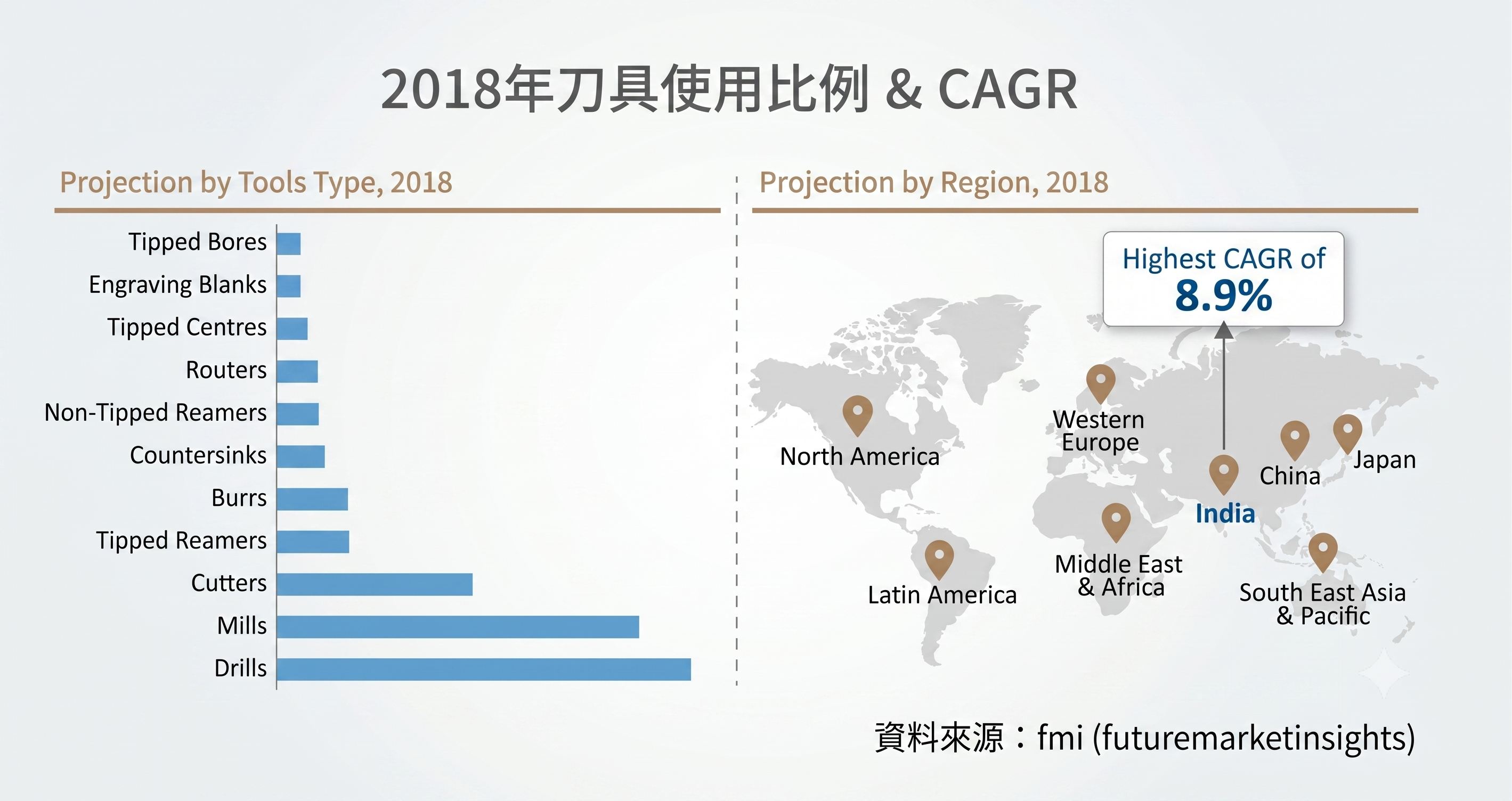
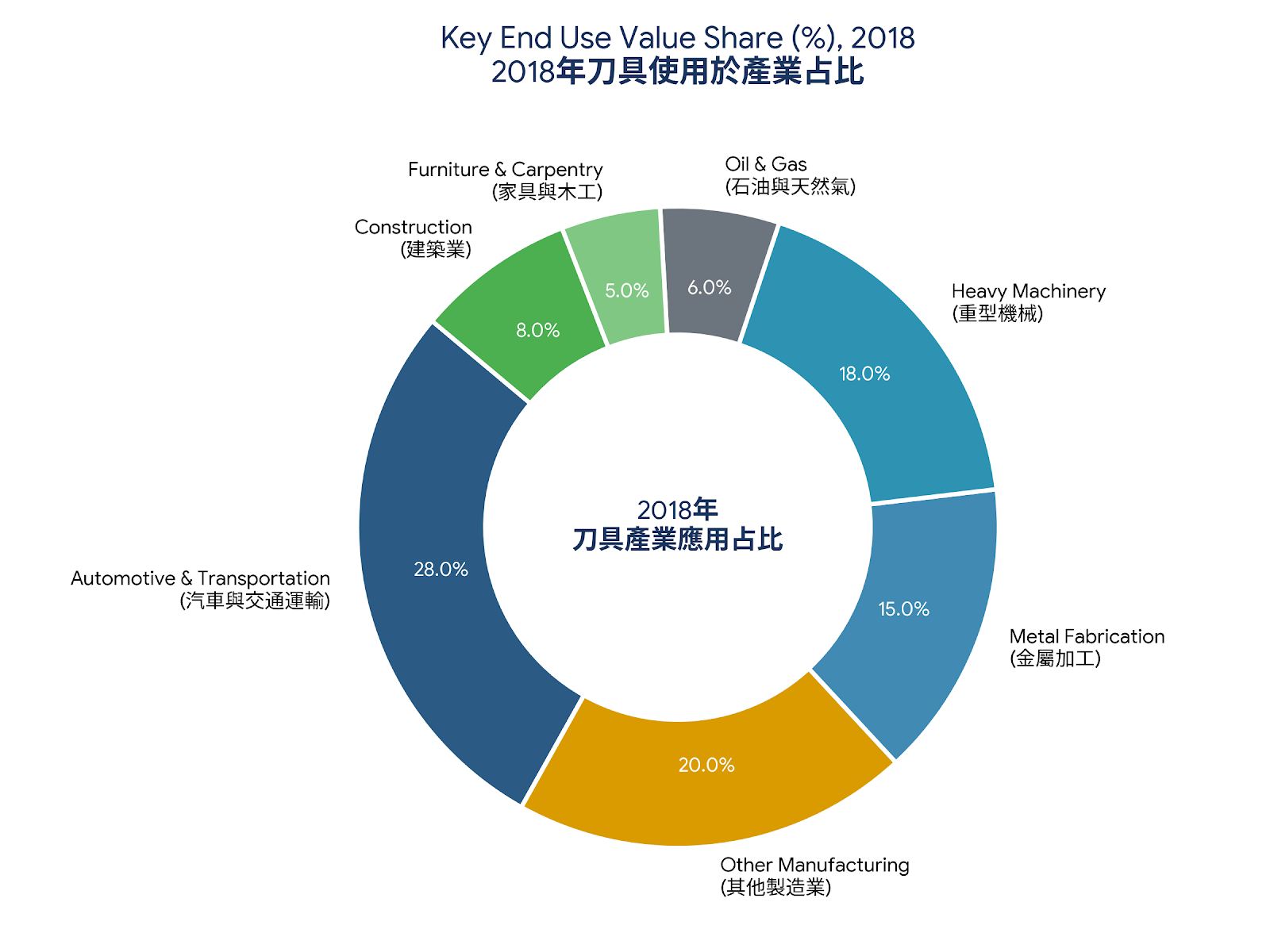
Globally, India is the fastest-growing market (8.9% CAGR), while Southeast Asia's strategic importance is rising. Additionally, the booming Electric Vehicle (EV) and autonomous driving markets are heavily driving the demand for precision cutting tools, which now account for over 50% of the overall market share.
Industry-Academia Collaboration
Moving away from the obsolete low-cost, high-volume business model, the Taiwan Cutting-Tool Engineering Association was established in late 2020. Partnering with the Precision Machinery Research & Development Center (PMC) and National Formosa University, the industry is adopting a dual-track upgrade strategy:
- Tool Process Refinement (Priority): Integrating design, manufacturing, and measurement equipment to establish objective third-party verification standards.
- Smart Interconnectivity: Implementing machine smartification, IoT, and big data analysis to optimize production efficiency and yield.
Through this collaborative ecosystem, Taiwan aims to deepen R&D, establish robust verification platforms, cultivate talent, and ultimately elevate its global competitiveness.